How to Say Do you want in Turkish
How to Say Do you want in Turkish?
🇹🇷 Turkish “İstiyor musun?” Demystified: How to Say “Do you want?” 🇹🇷
Merhaba! 🤗 The Turkish question “İstiyor musun?” seems tricky, but it’s actually very logical. Let’s break it down piece by piece.
🔍 What does “İstiyor musun?” mean?
It simply means “Do you want?” or “Are you wanting?”.
-
İstiyor: This is the main verb
istemek(to want) in the present continuous tense (-iyor). It means “he/she/it wants”. -
musun: This is the magic question particle
mıcombined with the personal suffix for “you” (-sun).

🔍 Building Turkish Sentences Step-by-Step: “Do you want to eat an apple?”
| Step | Turkish | English | Explanation & Grammar |
|---|---|---|---|
| 1. The Action 🏃♂️ |
yemek | to eat | This is the infinitive (the action in its basic “to” form). • ye- (verb root: eat)• -mek (infinitive suffix: to) |
| 2. The Object 🎯 |
elma yemek | to eat an apple | We add the object of the action. In Turkish, the object typically comes before the verb. • elma (noun: apple) |
| 3. The Main Verb 💭 |
elma yemek istiyor | He/She wants to eat an apple | We add the main verb (“to want”) conjugated in the present tense. • iste- (verb root: want)• -iyor (present continuous tense suffix) |
| 4. The Question ❓ |
elma yemek istiyor mu | Does he/she want to eat an apple? | We add the question particle to turn it into a question. • mu (question particle) |
| 5. The Person 👤 |
elma yemek istiyor mu sun? |
Do you want to eat an apple? | Finally, we add the personal suffix to specify “you”. • -sun (2nd person singular suffix: you are) |
✅ Final Result & Answer Format
| Question & Answer | Breakdown | |
|---|---|---|
| ❓ Question | 🇹🇷 Elma yemek istiyor musun? 🇬🇧 Do you want to eat an apple? |
Structure: Object + Infinitive Verb + Main Verb + Question + Person |
| ✅ Answer | 🇹🇷 Evet, elma yemek istiyorum. 🇬🇧 Yes, I want to eat an apple. |
Structure: Object + Infinitive Verb + Main Verb + Person ( -um = I) |
| ❌ Answer | 🇹🇷 Hayır, elma yemek istemiyorum. 🇬🇧 No, I don’t want to eat an apple. |
Structure: Object + Infinitive Verb + Main Verb + Negative + Person |

💬 Practice Table: “Do you want…?” in Different Contexts
Aşağıdaki tabloyu, soruyu ve olası cevapları yüksek sesle pratik yapmak için kullanın!
| Turkish Question & Answers ❓✅❌ | English Translation & Answers |
|---|---|
| Çay istiyor musun? ☕ | Do you want tea? ✅ Evet, istiyorum. (Yes, I want.) ❌ Hayır, istemiyorum. (No, I don’t want.) |
| Su istiyor musun? 💧 | Do you want water? ✅ Evet, lütfen. (Yes, please.) ❌ Hayır, teşekkürler. (No, thank you.) |
| Yarım saat dinlenmek istiyor musun? 😴 | Do you want to rest for half an hour? ✅ Evet, çok yoruldum. (Yes, I’m very tired.) ❌ Hayır, iyiyim. (No, I’m okay.) |
| Bu filmi izlemek istiyor musun? 🎬 | Do you want to watch this movie? ✅ Evet, çok istiyorum! (Yes, I really want to!) ❌ Hayır, ilgimi çekmiyor. (No, it doesn’t interest me.) |
| Yarın okula gitmek istiyor musun? 🏫 | Do you want to go to school tomorrow? ✅ Evet, gitmek istiyorum. (Yes, I want to go.) ❌ Hayır, gitmek istemiyorum. (No, I don’t want to go.) |
| Benimle konuşmak istiyor musun? 💬 | Do you want to talk with me? ✅ Evet, tabii ki. (Yes, of course.) ❌ Hayır, şu an değil. (No, not right now.) |
| Dondurma istiyor musun? 🍦 | Do you want ice cream? ✅ Evet, bayılırım! (Yes, I love it!) ❌ Hayır, üşüdüm. (No, I’m cold.) |
| Yeni telefon almak istiyor musun? 📱 | Do you want to buy a new phone? ✅ Evet, eski telefonum bozuldu. (Yes, my old phone is broken.) ❌ Hayır, bence gerek yok. (No, I don’t think it’s necessary.) |
| Evde kalmak istiyor musun? 🏠 | Do you want to stay at home? ✅ Evet, dışarısı çok sıcak. (Yes, it’s too hot outside.) ❌ Hayır, dışarı çıkalım. (No, let’s go out.) |
| Biraz müzik dinlemek istiyor musun? 🎵 | Do you want to listen to some music? ✅ Evet, harika bir fikir! (Yes, what a great idea!) ❌ Hayır, sessizlik olsun. (No, let’s have silence.) |
📚 Example 2: “Do you want water?”
| Turkish Sentence & Translation | Grammar & Vocabulary Breakdown |
|---|---|
| 🇹🇷 Su istiyor musun? 🇬🇧 Do you want water? — Affirmative Answer: 🇹🇷 Evet, su istiyorum. 🇬🇧 Yes, I want water. — Negative Answer: 🇹🇷 Hayır, su istemiyorum. 🇬🇧 No, I don’t want water. |
🔍 Question Analysis: – Su (Water)– İst-iyor (He/she wants): iste- (to want) + -iyor (present continuous tense)– mu-sun (Do you?): mı/mu (question particle) + -sun (you are)✅ Affirmative Answer:– İst-iyor-um (I want): iste- + -iyor + -um (I am)❌ Negative Answer:– İste-mi-yor-um (I don’t want): iste- + -me (negative suffix) + -iyor + -um– Note: The verb root iste- keeps its full form iste- before the negative suffix -me. |
📚 Example 3: “Do you want coffee?”
| Turkish Sentence & Translation | Grammar & Vocabulary Breakdown |
|---|---|
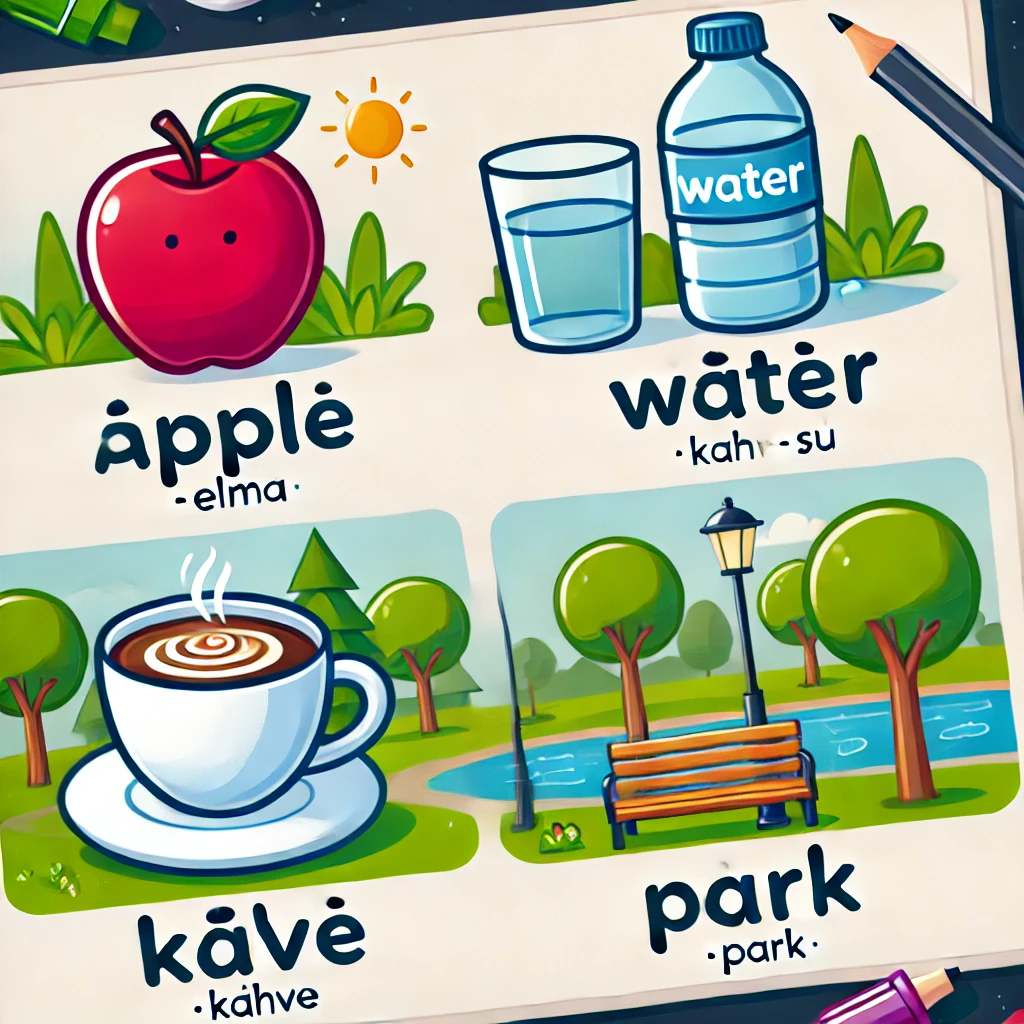
| 🇹🇷 Kahve istiyor musun? ☕ 🇬🇧 Do you want coffee? — Affirmative Answer: 🇹🇷 Evet, kahve istiyorum. 🇬🇧 Yes, I want coffee. — Negative Answer: 🇹🇷 Hayır, kahve istemiyorum. 🇬🇧 No, I don’t want coffee. |
🔍 Question Analysis: • Kahve (Coffee) ☕• İst-iyor (He/she wants)• mu-sun (Do you?)✅ Affirmative Answer:• İst-iyor-um (I want)❌ Negative Answer:• İste-mi-yor-um (I don’t want) |

Question: How do you form sentences with two verbs in Turkish, like “I want to walk”?
Answer: When a sentence has two verbs, the first verb takes the infinitive suffix (-mek or -mak), and the second verb is conjugated for tense and person.
📚 10 Examples: “Do you want to…?” & “I want to…”
| # | Question & Answer (English & Turkish) | Grammar Breakdown |
|---|---|---|
| 1 | Q: Do you want to walk in the park? 🌳 🇹🇷 Parkta yürü-mek istiyor musun? A: Yes, I want to walk in the park. 🇹🇷 Evet, parkta yürü-mek istiyorum. |
• yürü-mek: yürü- (walk) + -mek (infinitive)• ist-iyor: iste- (want) + -iyor (present tense) |
| 2 | Q: Do you want to watch a movie? 🎬 🇹🇷 Film izle-mek istiyor musun? A: No, I don’t want to watch a movie. 🇹🇷 Hayır, film izle-mek istemiyorum. |
• izle-mek: izle- (watch) + -mek (infinitive)• iste-mi-yor: iste- + -me (negative) + -iyor |
| 3 | Q: Do you want to read this book? 📖 🇹🇷 Bu kitabı oku-mak istiyor musun? A: Yes, I want to read it. 🇹🇷 Evet, onu oku-mak istiyorum. |
• oku-mak: oku- (read) + -mak (infinitive)• ist-iyor: iste- + -iyor (present tense) |
| 4 | Q: Do you want to drink coffee? ☕ 🇹🇷 Kahve iç-mek istiyor musun? A: No, I don’t want to drink coffee. 🇹🇷 Hayır, kahve iç-mek istemiyorum. |
• iç-mek: iç- (drink) + -mek (infinitive) |
📚 Example 4: “Do you want to walk in the park?” 🌳
| Turkish Sentence & Translation | Grammar & Vocabulary Breakdown |
|---|---|
| 🇹🇷 Park-ta yürü-mek istiyor musun? 🌳 🇬🇧 Do you want to walk in the park? — Affirmative Answer: 🇹🇷 Evet, parkta yürümek istiyorum. 🇬🇧 Yes, I want to walk in the park. — Negative Answer: 🇹🇷 Hayır, parkta yürümek istemiyorum. 🇬🇧 No, I don’t want to walk in the park. |
🔍 Question Analysis: • Park-ta (In the park): Park + -ta (locative suffix)• Yürü-mek (To walk): Yürü- + -mek (infinitive suffix)• İst-iyor mu-sun (Do you want?)✅ Affirmative Answer:• Yürü-mek ist-iyor-um (I want to walk) |
📚 Example 5: “Do you want to watch a movie?” 🎬
| Turkish Sentence & Translation | Grammar & Vocabulary Breakdown |
|---|---|
| 🇹🇷 Film izle-mek istiyor musun? 🎬 🇬🇧 Do you want to watch a movie? — Affirmative Answer: 🇹🇷 Evet, film izlemek istiyorum. 🇬🇧 Yes, I want to watch a movie. — Negative Answer: 🇹🇷 Hayır, film izlemek istemiyorum. 🇬🇧 No, I don’t want to watch a movie. |
🔍 Question Analysis: • Film (Movie) 🎬• İzle-mek (To watch): İzle- + -mek (infinitive suffix)• İst-iyor mu-sun (Do you want?)✅ Affirmative Answer:• İzle-mek ist-iyor-um (I want to watch) |
📚 Example 6: “Do you want to read a book?” 📚
| Turkish Sentence & Translation | Grammar & Vocabulary Breakdown |
|---|---|
| 🇹🇷 Kitap oku-mak istiyor musun? 📚 🇬🇧 Do you want to read a book? — Affirmative Answer: 🇹🇷 Evet, kitap okumak istiyorum. 🇬🇧 Yes, I want to read a book. — Negative Answer: 🇹🇷 Hayır, kitap okumak istemiyorum. 🇬🇧 No, I don’t want to read a book. |
🔍 Question Analysis: • Kitap (Book) 📚• Oku-mak (To read): Oku- + -mak (infinitive suffix)• İst-iyor mu-sun (Do you want?)✅ Affirmative Answer:• Oku-mak ist-iyor-um (I want to read) |
📌 Important Grammar Notes:
-
Infinitive Verbs:
-mek/-maksuffixes create the “to + verb” form in English -
Locative Case:
-ta/-te/-da/-desuffixes show location (in/on/at) -
Question Pattern: Verb +
-iyor+mu+ personal suffix -
Negative Form:
iste-me-(don’t want) +-iyor+ personal suffix