Turkish Lesson 2-Section 3 (Question tags and sentence examples)

Voice in Turkish
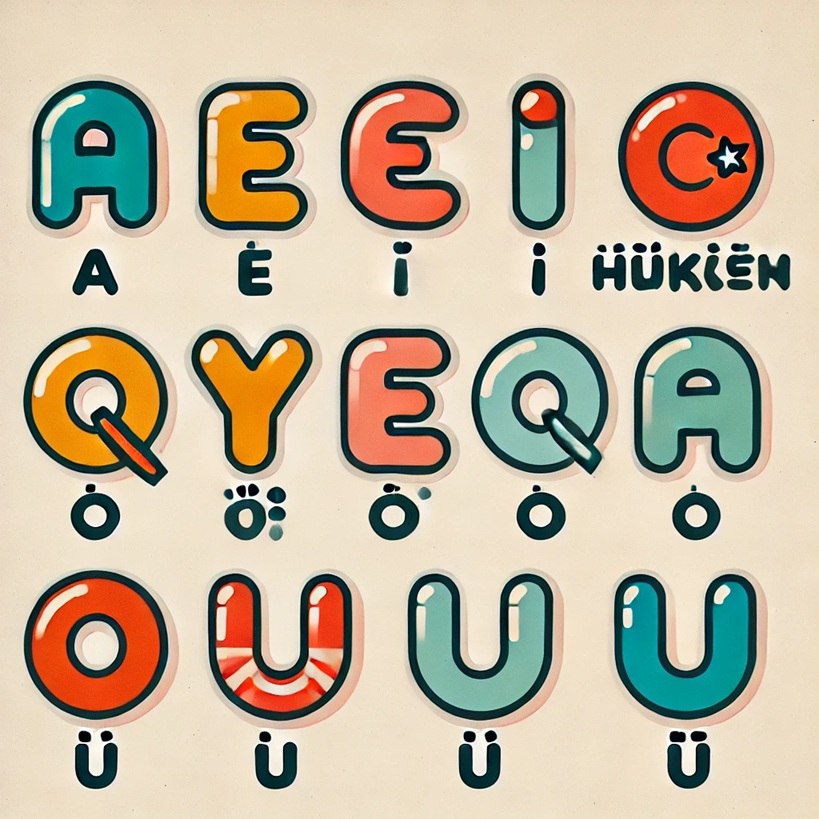
1. Dotted Vowels (ü, ö, i or e)
- If the last vowel of the word is a dotted vowel, the question suffix will also have a dotted vowel.
- Use “mi” or “mü” as the question suffix.
- Examples:
- For güzel (last vowel “e”, which is dotted), use mi: “Güzel mi?” (Is she beautiful?)
- For küçük (last vowel “ü”, which is dotted), use mü: “Küçük mü?” (Is he small?)
2. Undotted Vowels (u, o, ı, a)
- If the last vowel of the word is an undotted vowel, the question suffix will also have an undotted vowel.
- Use “mı” or “mu” as the question suffix.
- Examples:
- For kısa (last vowel “a”, which is undotted), use mı: “Kısa mı?” (Is he short?)
- For mutlu (last vowel “u”, which is undotted), use mu: “Mutlu mu?” (Is he happy?)
Summary Table
| Last Vowel of Word | Question Suffix |
|---|---|
| Dotted ( ö, ü )
e- i |
mü
mi |
| Undotted (a, ı,)
o, u |
mı
mu |
By following these rules, you can choose the correct question suffix based on the last vowel of the word.
In short, in Turkish, we decide which question suffix to use by looking at the last vowel of the previous word. When you’re just starting to learn, this might seem difficult. If you forget, just use the suffix “mı.” It’s only a small mistake, and everyone will understand what you mean.
For example, in the phrase “Bu kalem mi?” (Is this a pen?), the last vowel in the word *kalem* is “e.” When you see the vowel “e,” you should use the question suffix “mi.” But if you say “kalem mu?” or “kalem mı?” instead, it’s just a small error, and people will still understand you. So focus on speaking!
- If the last vowel is a or ı, use mı.
- If the last vowel is e or i, use mi.
- If the last vowel is o or u, use mu.
- If the last vowel is ö or ü, use mü.